















Jewish Symbols Explained: Star of David, Chai, Hamsa, Menorah and More
Jewish symbols carry a great deal of history in very little space. Some are commanded in the Torah, some emerged in the Middle Ages, and some are folk objects shared with neighbouring cultures. This guide covers the ones you are most likely to encounter, and says plainly where each one actually comes from.
Star of David (Magen David)
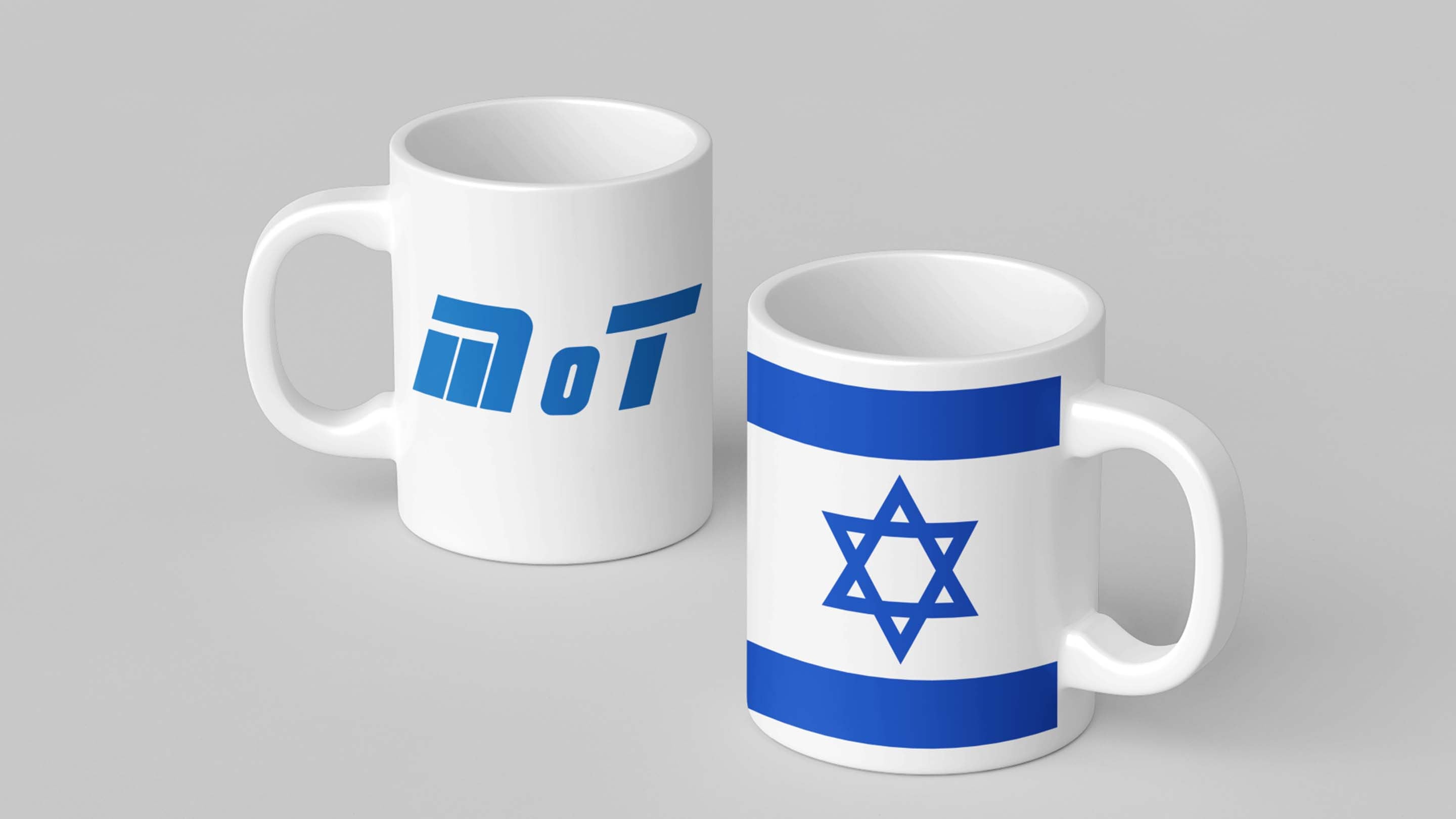
A six-pointed star formed by two overlapping triangles. The most widely recognised Jewish symbol in the world, though it is not mentioned in the Torah. It became a communal Jewish emblem in medieval Prague, spread through nineteenth-century Europe, and now sits at the centre of the flag of Israel.
Full detail in our guide to the Star of David.
Chai (חי)
Two Hebrew letters, chet and yod, spelling the word for living. Worn widely as a pendant, and often given at life-cycle events.
Its numerical value is 18, which is why Jewish charitable gifts are so frequently made in multiples of 18. A donation of 180 or 1,800 is a wish for life, expressed through arithmetic.
Hamsa
A downward-facing hand, usually with an eye at its centre, used as protection against the evil eye. The name comes from the Semitic root for five.
It is not a religious requirement and has no basis in Jewish law. It is a folk object shared across Jewish, Muslim and Christian communities of the Middle East and North Africa, called the Hand of Miriam in Jewish contexts and the Hand of Fatima in Muslim ones. See our article on the evil eye in Jewish tradition.
Menorah
The seven-branched lampstand that stood in the Temple in Jerusalem, described in detail in Exodus. It is the oldest continuously used Jewish symbol and appears on the emblem of the State of Israel.
Not to be confused with the nine-branched chanukiah used at Hanukkah. The difference is explained in our guide to the menorah and chanukiah.
Mezuzah
A small case fixed to the doorpost, containing a handwritten parchment scroll with verses from Deuteronomy. The scroll is the obligation; the case is decoration and may be plain or elaborate.
Placed on the right doorpost as you enter, in the upper third, angled inward in Ashkenazi practice and vertical in Sephardi practice.
Tree of Life (Etz Chaim)
A phrase from Proverbs applied to the Torah: a tree of life to those who hold fast to it. The image appears in synagogue art, on Torah ark curtains and in jewellery, and carries a general sense of continuity and rootedness rather than a specific ritual meaning.
Pomegranate
One of the seven species associated with the Land of Israel. Tradition holds that a pomegranate contains 613 seeds, matching the number of commandments, though anyone who has counted knows the number varies considerably.
Pomegranates decorate Torah scroll finials, called rimonim, and appear on Rosh Hashanah tables as a wish for a year full of good deeds. Our Rosh Hashanah collection uses the motif.
Shofar
A ram's horn sounded on Rosh Hashanah and at the close of Yom Kippur. Also a visual symbol of awakening and of the High Holidays generally. See our guide to the shofar.
Tablets of the Law
Two rounded stone tablets bearing the Ten Commandments, usually shown with Hebrew numerals or the opening words of each commandment. Common above synagogue arks.
The rounded top is an artistic convention rather than a description from the text, which does not specify the shape.
Hebrew Letters as Symbols
Individual letters carry meaning of their own. Shin (ש) appears on mezuzah cases, standing for Shaddai, one of the names of God. Bet (ב) is the first letter of the Torah. The letters are also numbers, which opens the door to gematria, the practice of reading numerical relationships between words.
Colours: Blue and White
Blue and white are read as Jewish colours largely through the tallit, the striped prayer shawl, and through tekhelet, the biblical blue dye whose source was lost in late antiquity. The flag of Israel draws on both. See our guide to the Israeli flag.
Common Questions
What is the oldest Jewish symbol?
The seven-branched menorah. It is described in the Torah and appears on Jewish artefacts from antiquity, long before the Star of David came into use.
Which Jewish symbols are in the Torah?
The menorah, the tzitzit fringes and the mezuzah scroll are all commanded directly. The Star of David, the hamsa and the Tree of Life motif are not; they developed later or came from folk practice.
What does Chai mean?
Living, or life. Its numerical value of 18 has made that number a standard unit for charitable giving.
Is the hamsa a Jewish symbol?
It is used by Jews, particularly those with roots in North Africa and the Middle East, but it is not exclusively Jewish and has no standing in Jewish law. It is a regional folk object.
Can non-Jews wear Jewish symbols?
There is no prohibition. The hamsa and the Tree of Life are worn widely across cultures. Ritual items such as tefillin or a tallit are a different matter, since they are tied to specific obligations.
From the MoT Shop
We print Jewish and pro-Israel designs to order and ship worldwide. Browse our Star of David and Jewish symbols collection, our Israel flag apparel, or read our guide to Judaica.