





Jewish New York: Communities, Neighborhoods and Where to Find Them
New York holds the largest Jewish community anywhere outside Israel. Roughly 1.4 million Jews live in the metropolitan area, and the 2023 community study counted about 960,000 in the five boroughs alone. Nearly half of those are in Brooklyn.
What follows is a guide to where those communities actually are, how they got there, and what distinguishes them from one another.
How Jewish New York Began
The first Jews arrived in New Amsterdam in 1654, a group of Sephardim fleeing Recife in Brazil after the Portuguese retook it from the Dutch. Congregation Shearith Israel, founded that year, is the oldest Jewish congregation in what is now the United States. Its 1897 building stands on Central Park West at 70th Street.
The great wave came later. Between 1880 and 1920, roughly two million Eastern European Jews arrived, and most passed through the Lower East Side. At its peak the neighbourhood held over 500,000 Jews in a few square miles.
Brooklyn
More Orthodox Jews live in Brooklyn than anywhere on earth outside Israel.
Borough Park
The largest Orthodox neighbourhood in America. Thirteenth Avenue on a Friday afternoon is the clearest picture of it: families buying for Shabbos, storefronts in Yiddish and English, everything closing before sundown. Borough Park recorded the highest birth rate of any New York City neighbourhood in 2015, and its Jewish population grew by 71 percent over the preceding decade.
Williamsburg
Home to the Satmar Hasidic community, among others. Yiddish is the daily language on much of the street, and the neighbourhood functions largely on its own institutions.
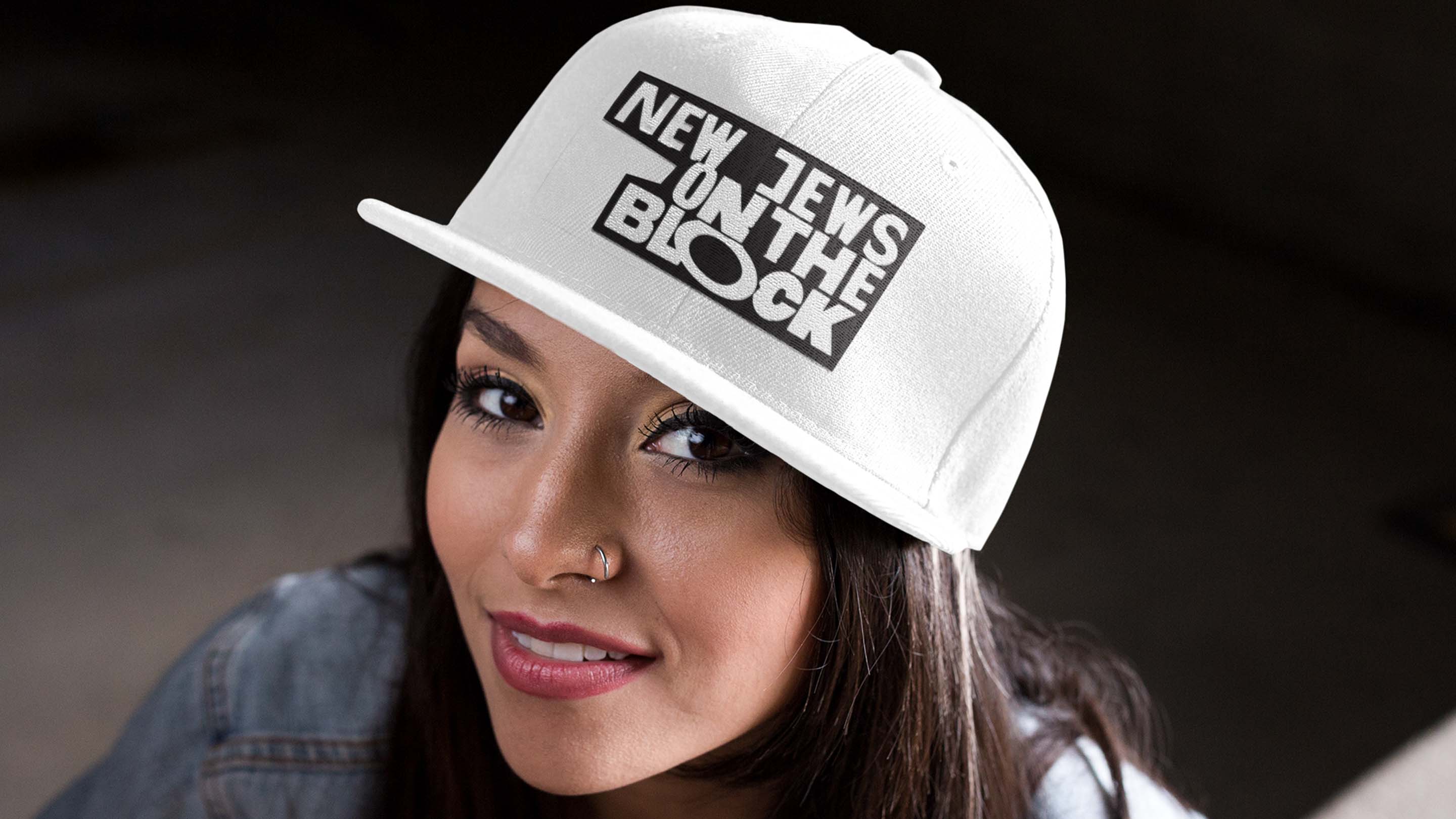
Since we are on the subject of Yiddish: our Yiddish shirts and Jewish humor collection carries Chutzpah Mode, Hot Girl Shtyus and New Jews on the Block, all drawn in house.
Crown Heights
The world headquarters of Chabad-Lubavitch sits at 770 Eastern Parkway. The address is known well enough that replicas have been built in other countries.
Flatbush and Midwood
Large and varied, spanning Modern Orthodox through Haredi, with a substantial Syrian Jewish community that arrived from Aleppo and Damascus in the early twentieth century and built its own institutions around Ocean Parkway.
Brighton Beach and Sheepshead Bay
Russian-speaking Jewish communities, largely post-Soviet. Shop signs in Cyrillic, and a food culture distinct from the Ashkenazi mainstream.
On the subject of food: our Jewish food shirts run to Rock n' Rugelach and Challah If Ya Hear Me. Printed to order, shipped anywhere in New York.
Manhattan
The Upper West Side is the centre of Conservative and Reform Jewish life in the city, with enough Jewish households, by one estimate, to match all of Cleveland. The Upper East Side, Washington Heights around Yeshiva University, and the remnants of the Lower East Side round out the picture.
The Lower East Side today is mostly memory. The Eldridge Street Synagogue is a museum. Katz's is still there. A few Judaica shops hold on.
For everyday wear rather than ritual: our Jewish streetwear and Star of David and Jewish symbols collection cover the range.
Queens
Kew Gardens Hills is Modern Orthodox and Bukharian, quieter and more affordable than Brooklyn. Forest Hills was roughly two thirds Jewish by 1970. Rego Park has a strong Bukharian presence, with Uzbek and Tajik food and Russian signage. Queens communities from the former Soviet Union grew by 47 percent over the last decade.
The Bronx and Beyond
Riverdale holds a significant community. But the fastest Orthodox growth in New York State is outside the city entirely: Rockland County and the Hudson Valley, including Monsey, New Square, Kiryas Joel and Monroe. These are among the fastest-growing communities in American Jewish life.
Common Questions
How many Jews live in New York?
New York State counts roughly 1,786,000, the largest of any state. The New York-Newark metropolitan area holds about 2,292,000, and the five boroughs about 960,000.
Which New York neighbourhood has the most Jews?
Borough Park in Brooklyn is the largest Orthodox neighbourhood in the United States. Across all denominations, Brooklyn holds more Jews than any other borough.
Is the Lower East Side still Jewish?
Not in the way it was. The population moved out over the twentieth century. The buildings, the museum synagogue and a handful of shops remain.
What is 770?
770 Eastern Parkway in Crown Heights, the world headquarters of the Chabad-Lubavitch movement. The building is so identified with the movement that copies of its facade exist elsewhere.
From the MoT Shop
We print Jewish and pro-Israel designs to order and ship across the United States. Browse our funny Jewish shirts, our Israel flag apparel, or read our guide to Jewish symbols.